
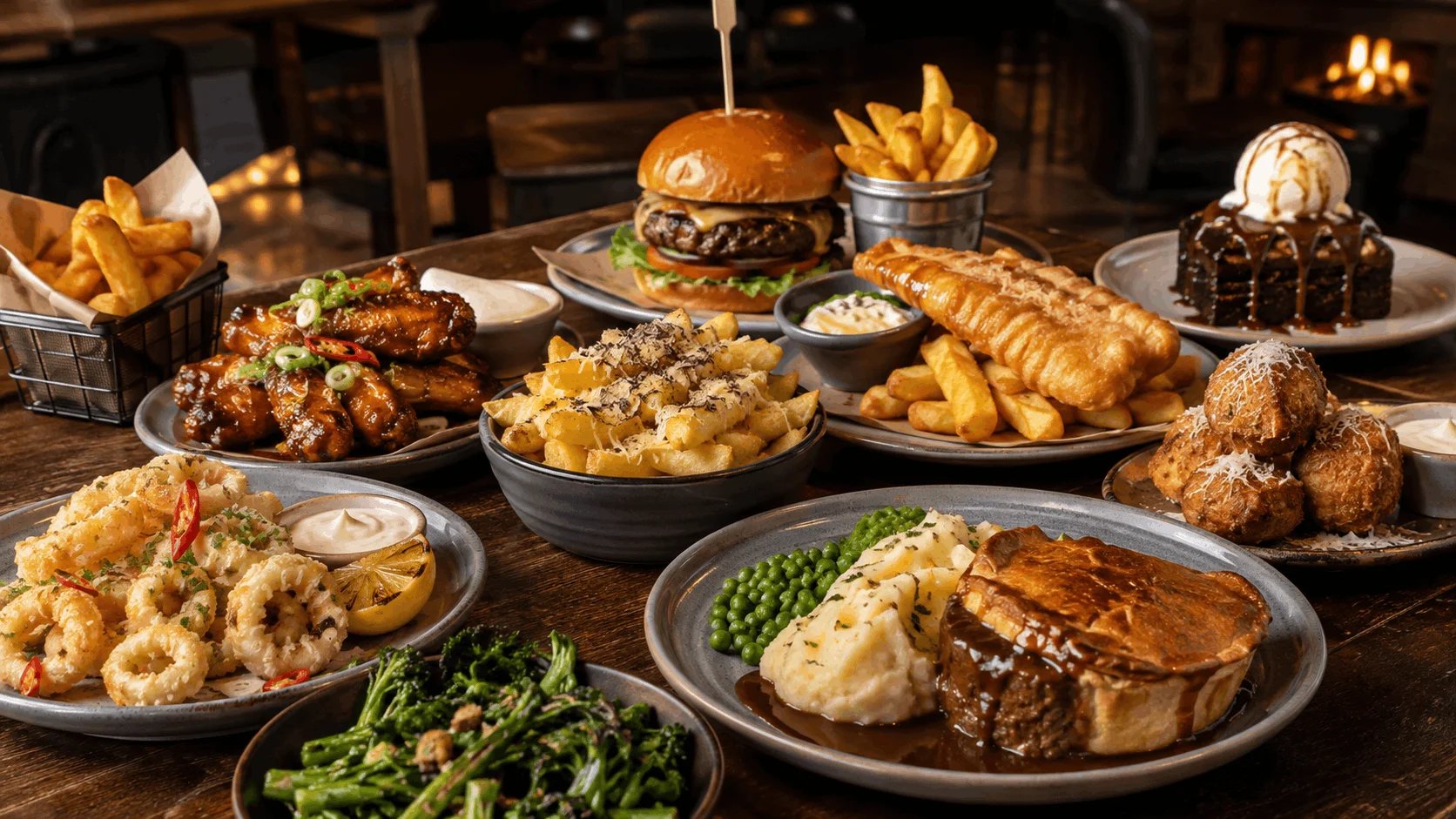
A good gastropub menu sits somewhere between classic pub comfort food and restaurant-quality cooking. Customers still expect burgers, fish and chips, pies, steaks, and indulgent desserts, but the ingredients, presentation, sauces, and seasonal touches should make those dishes feel more considered than standard bar food.
That balance is especially relevant in 2026. Pub chefs are increasingly focusing on tighter menus, elevated comfort food, local ingredients, shareable dishes, and familiar meals with global influences, rather than filling menus with dozens of complicated dishes. Pickled and fermented ingredients are also appearing more often as chefs look for acidity and crunch to balance richer meats and fried foods.
If you're planning a new menu or refreshing an existing one, here are 40 gastropub menu ideas, divided into starters, mains, sides, and desserts.
Gastropub starter ideas
Starters should introduce the style of your kitchen without overwhelming guests before their main course. A strong gastropub menu usually combines familiar sharing dishes with one or two more distinctive seasonal options.
1. Crispy calamari with lemon aioli
Lightly battered calamari is familiar enough for almost any pub audience but can easily feel more premium with good seasoning, fresh lemon, herbs, and homemade aioli.
Try serving it with:
- Lemon and garlic aioli
- Chili mayonnaise
- Parsley
- Pickled peppers
- Fresh lemon
It's also an easy dish for tables to share.
2. Sticky chicken wings
Chicken wings remain one of the easiest dishes to move between traditional pub food and modern gastropub territory.
Instead of offering six or seven sauces, choose one or two distinctive versions such as hot honey and chili, smoked BBQ, or gochujang and sesame. Fewer options help keep preparation and inventory manageable.
3. Baked Camembert with sourdough
A whole baked Camembert immediately creates a sharing occasion.
Serve it with toasted sourdough, chutney, roasted garlic, grapes, or seasonal preserves. It works particularly well on autumn and winter menus and can be positioned as a starter for two.
4. Beef croquettes with mustard mayo
Slow-cooked beef can be shredded, breadcrumbed, and fried into crisp croquettes with relatively small portions of meat.
Pair them with mustard mayonnaise, horseradish cream, or pickled vegetables to cut through the richness.
5. Crispy pork belly bites
Small pieces of slow-cooked pork belly can become a strong premium starter when finished with a sticky glaze.
Possible flavor combinations include apple and mustard, maple and chili, miso caramel, or soy and ginger.
6. Burrata with roasted tomatoes
Not every gastropub starter needs to be fried or meat-heavy.
Burrata with roasted or fresh tomatoes, basil oil, toasted sourdough, and balsamic makes a lighter vegetarian option while still feeling substantial enough for a restaurant-style pub menu.
7. Beer-battered onion rings with dipping sauce
Onion rings can work as both a side and a sharing starter.
Make them more distinctive by using your own beer batter and serving them with smoked garlic mayonnaise, barbecue sauce, or mustard dip.
8. Salt and pepper cauliflower
Cauliflower is increasingly useful as a main ingredient rather than simply a vegetable side, and pub chefs have highlighted its versatility for 2026 menus.
Fry or roast cauliflower pieces and season them with chili, scallions, garlic, and spices. Serve with sesame mayonnaise or a yogurt-based dip.
9. Sausage roll with house chutney
A proper homemade sausage roll fits naturally into a gastropub menu.
Use high-quality pork sausage meat and elevate it with ingredients such as sage, caramelized onion, black pudding, apple, or fennel. Serve warm with mustard or house chutney.
10. Loaded fries
Loaded fries work particularly well if you want one informal starter designed for sharing.
Good combinations include:
- Pulled beef and cheese
- Buffalo chicken and ranch
- Truffle Parmesan
- Bacon, cheddar, and scallions
- Curry sauce and crispy onions
Loaded formats continue to perform well because they transform inexpensive, recognizable ingredients into higher-value dishes.
Gastropub main course ideas
Your mains should contain the dishes customers expect from a pub while giving each one a reason to choose your gastropub over somewhere else.
You don't need to reinvent fish and chips or the cheeseburger. Often, better meat, better bread, a house sauce, thoughtful sides, and good execution are enough.
11. Beer-battered fish and chips
Fish and chips deserves a place on almost any British-inspired gastropub menu.
Use a crisp beer batter, thick-cut chips, tartare sauce, lemon, and either mushy peas or crushed peas. Making the tartare sauce yourself is a small detail that immediately makes the dish feel less generic.
12. Gastropub cheeseburger
A burger may be familiar, but it can easily become one of the strongest dishes on your menu.
A simple combination could include a smashed or grilled beef patty, mature cheddar, pickles, shredded lettuce, onions, and house burger sauce on a brioche or potato bun.
Avoid adding too many components. A well-executed burger with six ingredients is usually better than one containing fifteen.
13. Bacon and blue cheese burger
Keep one premium burger alongside your classic version.
Blue cheese, crispy bacon, caramelized onion, and peppery rocket create a richer option without requiring completely different kitchen ingredients.
14. Buttermilk fried chicken burger
A crispy chicken burger provides an alternative to beef while using ingredients that can also appear elsewhere on your menu.
Try buttermilk chicken with slaw, pickles, hot honey, and garlic mayonnaise.
Pickled ingredients are particularly useful alongside fried or fatty foods because their acidity provides contrast to richer flavors.
15. Steak and ale pie
Few dishes communicate "pub food" as clearly as a proper pie.
Slow-cooked beef, ale gravy, mushrooms, and onions can be topped with pastry and served with mash, seasonal vegetables, and extra gravy.
For a more distinctive identity, use a local ale and name it on the menu.
16. Chicken, leek, and mushroom pie
Offering a second pie gives customers a lighter alternative to beef.
Chicken thigh, leek, mushroom, herbs, and creamy sauce work well beneath either puff pastry or shortcrust pastry.
17. Bangers and mash
Sausage and mash is inexpensive, familiar, and comforting, which makes it useful for balancing more premium dishes on the menu.
Serve quality sausages over buttery mash with onion gravy, crispy onions, and seasonal greens.
18. Slow-cooked beef short rib
Short rib provides a restaurant-style centerpiece without taking the menu too far away from pub comfort food.
Serve it with creamy mash, red wine gravy, roasted carrots, and crispy shallots.
It can also become one of the higher-priced dishes that anchors the rest of the menu.
19. Rib-eye steak and chips
A straightforward steak can remain one of the premium items on your gastropub menu.
Serve with hand-cut chips, dressed leaves or watercress, and a choice of one or two sauces such as:
- Peppercorn
- Béarnaise
- Garlic herb butter
Limiting sauces makes service easier while still giving customers some choice.
20. Steak frites
If a full steak dinner feels too formal, steak frites creates a slightly more casual alternative.
Use sliced sirloin or bavette steak, skinny fries, peppercorn sauce or café de Paris butter, and a simple dressed salad.
21. Slow-roasted pork belly
Pork belly works particularly well in gastropubs because it combines comforting flavors with a more restaurant-style presentation.
Pair crispy pork belly with apple purée, mustard sauce, mash, braised cabbage, or pickled vegetables.
22. Roast chicken with herb gravy
A well-roasted half chicken can become a signature dish with relatively little complexity.
Serve it with roast potatoes or fries, greens, herb gravy, and roasted garlic.
Alternatively, use a spicy marinade or Middle Eastern-style seasoning to give the dish a more contemporary direction.
23. Grilled salmon with crushed potatoes
Your fish section shouldn't rely entirely on battered fish.
Grilled salmon with crushed new potatoes, seasonal greens, lemon butter, and herbs provides a lighter alternative while still feeling substantial.
24. Wild mushroom and Parmesan risotto
A gastropub menu needs at least one vegetarian main that feels designed as a complete dish rather than a modified meat entrée.
Wild mushroom risotto with Parmesan, herbs, roasted mushrooms, and truffle oil is familiar enough to sell while still fitting a more elevated pub menu.
25. Cauliflower steak with tahini and chimichurri
A thick roasted cauliflower steak can provide a plant-forward alternative to processed meat substitutes.
Try pairing it with tahini yogurt, chimichurri, toasted seeds, chickpeas, herbs, or crispy potatoes.
The move toward recognizable vegetables rather than highly processed vegetarian alternatives is also showing up in current pub food thinking.
26. Sunday roast
If you trade on Sundays, a proper roast can become one of the strongest reasons for customers to visit.
Offer one or two meats rather than an enormous selection. For example:
Roast beef
Yorkshire pudding, roast potatoes, carrots, seasonal greens, cauliflower cheese, and gravy.
Roast chicken
Stuffing, roast potatoes, seasonal vegetables, Yorkshire pudding, and chicken gravy.
A vegetarian nut roast or roasted vegetable Wellington can complete the offering.
Gastropub side dish ideas
Sides are more important than they may appear. They let guests personalize meals, create easy sharing opportunities, and can increase average order value without requiring another full main course.
Foodservice analysts in 2026 have specifically highlighted sides, extras, and add-ons as increasingly important tools for restaurant and pub profitability.
27. Triple-cooked chips
If chips accompany several mains, making them genuinely good can improve the perception of the entire menu.
Serve them simply with sea salt, or offer premium upgrades such as Parmesan, truffle, or garlic butter.
28. Truffle Parmesan fries
Turn your standard fries into an easy upsell with Parmesan, truffle oil or truffle seasoning, parsley, and garlic mayonnaise.
Because the base product is already used elsewhere, this doesn't require another major inventory item.
29. Mac and cheese
Mac and cheese can work as a side, standalone comfort dish, or base for additional toppings.
Keep the regular version straightforward with mature cheddar and a crispy breadcrumb top.
30. Cauliflower cheese
Cauliflower cheese deserves a place beyond Sunday lunch.
Roasted cauliflower in rich cheese sauce with a browned top works with steaks, pies, roasted meats, and vegetarian dishes.
31. Buttered seasonal greens
Not every side needs to be heavy.
Green beans, cabbage, kale, peas, broccoli, or whatever is currently in season can be finished simply with butter, lemon, herbs, or garlic.
32. Charred tenderstem broccoli
Charred broccoli with lemon and garlic makes an easy premium vegetable side.
For a more contemporary version, add chili crisp, tahini, almonds, or Parmesan.
33. House slaw
A fresh, acidic slaw is particularly useful alongside burgers, fried chicken, ribs, and barbecue-style dishes.
Instead of a heavy mayonnaise-based version, consider cabbage, carrot, apple, herbs, and a lighter mustard dressing.
34. Pickles and fermented vegetables
A small bowl of house pickles can work surprisingly well as a side or add-on.
Cucumber, red onion, cabbage, chilies, carrots, or radishes can all be pickled and used across multiple dishes. Fermented and pickled flavors are appearing increasingly often on pub menus in 2026, especially alongside rich meats and fried foods.
Gastropub dessert ideas
Dessert menus don't need to contain ten choices. Four to six strong options are usually enough to cover chocolate, fruit, warm pudding, something lighter, and perhaps cheese.
Nostalgic desserts are particularly well suited to gastropubs because they fit the broader trend toward familiar comfort dishes served with better ingredients and presentation.
35. Sticky toffee pudding
Sticky toffee pudding is almost made for a gastropub menu.
Serve a warm date sponge with toffee sauce and vanilla ice cream, clotted cream, or custard. The contrast between hot pudding and cold ice cream makes it an easy crowd-pleaser.
36. Chocolate brownie sundae
A brownie sundae provides a recognizable, indulgent option that also works well for sharing.
Combine warm brownie pieces with vanilla ice cream, chocolate sauce, whipped cream, and toasted nuts or cookie crumb.
37. Apple and blackberry crumble
Seasonal fruit crumble reinforces the traditional pub side of your menu.
Serve it hot with proper vanilla custard or ice cream. Change the fruit throughout the year to make the dessert feel seasonal without rebuilding the entire dish.
38. Basque cheesecake
Basque cheesecake gives you a modern alternative to traditional baked cheesecake.
Its deeply caramelized exterior means it already looks distinctive with relatively little additional decoration. Serve it with seasonal berries, fruit compote, or salted caramel.
39. Chocolate and Guinness cake
Using stout in a rich chocolate cake connects the dessert directly to the pub environment.
Serve with cream cheese frosting, vanilla ice cream, or stout caramel sauce.
If you stock a local stout, using it in the recipe can create another opportunity to emphasize local suppliers.
40. British cheeseboard
Not every customer wants something sweet.
A small cheeseboard with three carefully selected cheeses, crackers, chutney, grapes, and perhaps honey gives customers a dessert that pairs naturally with wine, port, beer, or whisky.
Example gastropub menu
You don't need all 40 dishes. A smaller, more focused menu is often easier for guests to understand and easier for the kitchen to execute consistently.
A practical gastropub menu might look something like this:
Starters
Crispy Calamari
Lemon, parsley, garlic aioli
Beef Croquettes
Slow-cooked beef, mustard mayonnaise, pickles
Baked Camembert
Sourdough, roasted garlic, seasonal chutney
Salt & Pepper Cauliflower
Chili, scallions, sesame mayonnaise
Mains
Beer-Battered Fish & Chips
Crushed peas, tartare sauce, lemon
House Cheeseburger
Beef patty, cheddar, pickles, lettuce, burger sauce, fries
Steak & Ale Pie
Buttery mash, seasonal greens, ale gravy
Slow-Roasted Pork Belly
Apple, mustard, cabbage, roasted potatoes
Grilled Salmon
Crushed potatoes, seasonal greens, lemon butter
Mushroom & Parmesan Risotto
Roasted mushrooms, herbs, Parmesan
Sides
Triple-Cooked Chips
Truffle Parmesan Fries
Cauliflower Cheese
Seasonal Greens
House Pickles
Desserts
Sticky Toffee Pudding
Toffee sauce, vanilla ice cream
Basque Cheesecake
Seasonal fruit compote
Chocolate Brownie Sundae
Vanilla ice cream, chocolate sauce
British Cheeseboard
Crackers, chutney, grapes
This creates enough variety for different customers without forcing the kitchen to prepare dozens of unrelated ingredients.
What makes a good gastropub menu?
The biggest mistake is assuming that a gastropub menu needs to be complicated.
It doesn't.
The difference between ordinary pub food and good gastropub food is often execution rather than complexity. A burger becomes better because you're using quality beef, good cheese, homemade sauce, and properly cooked fries. Fish and chips improves through better fish, lighter batter, house tartare sauce, and consistent frying.
A strong gastropub menu should therefore combine a few principles.
Keep recognizable dishes
People visit pubs for comfort as much as novelty. Burgers, pies, steak, fish and chips, roast dinners, and sticky toffee pudding are recognizable for a reason.
You can modernize them without removing the characteristics customers actually like.
Add a few distinctive dishes
Not every dish should be predictable.
Use two or three items to give your pub its own personality. That might be a Korean-inspired chicken starter, locally caught fish, a particular steak cut, house-made sausages, or vegetables grown by a nearby farm.
Current pub chefs are increasingly emphasizing local produce and distinctive sourcing rather than constantly chasing short-lived trends.
Use ingredients across several dishes
If pickled onions appear on a burger, they might also work with pork belly and croquettes. Mushrooms can appear in a starter, pie, risotto, and steak sauce.
This makes purchasing and prep easier while reducing waste.
The same thinking applies to sauces, garnishes, vegetables, bread, and sides. A tighter menu with shared components is increasingly important as pubs manage food costs and kitchen labor.
How many dishes should a gastropub menu have?
There's no perfect number, but more choice isn't automatically better.
For many independent gastropubs, something around 20–30 core food items can provide plenty of variety when divided across starters, mains, sides, and desserts.
For example:
- 5–7 starters
- 8–12 mains
- 4–6 sides
- 4–6 desserts
Seasonal specials can then add variety without permanently increasing the size of the menu.
This approach also makes it easier to rotate ingredients. Your summer menu might emphasize tomatoes, salads, grilled fish, and berries, while autumn brings mushrooms, squash, braised meats, pies, and warm puddings.
Balance comfort food with lighter choices
A menu dominated entirely by burgers, pastry, fried food, and cream sauces can feel repetitive.
You don't need to turn your gastropub into a health restaurant, but provide some contrast. A grilled fish dish, seasonal vegetable main, fresh salad, lighter starter, and vegetable sides give customers alternatives.
Think about the menu as a whole rather than individual dishes. If six mains already come with fries, another fried starter may add less value than something fresh or acidic.
Include vegetarian dishes people actually want to order
A vegetarian dish shouldn't feel like an obligation hidden at the bottom of the menu.
Instead of relying entirely on processed meat substitutes, use ingredients that work well in their own right: mushrooms, cauliflower, squash, lentils, cheese, beans, potatoes, and seasonal vegetables.
A mushroom risotto, cauliflower steak, cheese and onion pie, vegetable Wellington, or roasted squash dish can comfortably sit alongside meat-based pub classics.
Create profitable upgrades and add-ons
Instead of adding another five main courses, look at how customers can customize dishes you're already serving.
Simple gastropub add-ons could include:
Add-on | Works with |
|---|---|
Peppercorn sauce | Steak |
Béarnaise sauce | Steak and fries |
Fried egg | Burger, steak |
Bacon | Burgers |
Extra cheese | Burgers, fries |
Truffle Parmesan upgrade | Fries |
Mac and cheese | Steak, burgers, chicken |
Onion rings | Burgers, steaks |
Extra gravy | Pie, roast |
House pickles | Burgers, fried chicken, pork |
Sides and add-ons can contribute meaningfully to spend while keeping the headline price of core dishes more approachable.
Don't forget the drinks menu
Gastropubs sit at the intersection of restaurants and pubs, which means drinks shouldn't be treated as an afterthought.
Build the food menu alongside:
- Local and craft beers
- Cider
- Red, white, rosé, and sparkling wines
- Classic cocktails
- Spritzes
- Alcohol-free beer
- Mocktails
- Soft drinks
- Coffee and tea
Where possible, suggest obvious pairings. A local pale ale beside your fish and chips or a stout recommendation beneath steak and ale pie can make the menu more useful without adding lengthy descriptions.
If you're creating the drinks separately, you can start with a drink menu template or cocktail bar menu template.
Keep menu descriptions short
Gastropub dishes usually don't need paragraphs of explanation.
Instead of:
Our locally sourced premium beef burger is cooked to perfection and served on a delicious toasted brioche bun alongside mature cheddar cheese, homemade pickles and our signature sauce.
Use:
House Cheeseburger
Beef, mature cheddar, pickles, lettuce, house sauce, fries
The second version tells customers what they need to know much faster.
Short descriptions are particularly important on mobile and QR code menus where guests are scrolling through several sections.
Create a digital gastropub menu
Printed menus still work, but gastropubs frequently change dishes because of seasonality, supplier availability, specials, and changing ingredient costs.
A digital menu makes those changes much easier.
With mmmmenu, you can use the Gastro Pub menu template to add your starters, mains, sides, desserts, drinks, descriptions, and prices, then publish the menu as a mobile-friendly link or QR code. Items and prices can be updated later without having to print an entirely new menu.
For a more traditional approach, there's also a Pub food menu template, or you can browse all restaurant menu templates.
Frequently asked questions about gastropub menus
What food is usually served in a gastropub?
Gastropubs typically serve elevated versions of familiar pub dishes such as burgers, fish and chips, pies, steaks, roast dinners, sausages, and puddings. Many also include seasonal produce, restaurant-style starters, vegetarian dishes, and internationally influenced flavors.
What is the difference between a pub and a gastropub?
A traditional pub is primarily associated with drinks, although many also serve food. A gastropub places considerably more emphasis on the quality and presentation of its food while retaining the relaxed atmosphere and drinks offering of a pub.
What are good gastropub starters?
Popular gastropub starter ideas include calamari, croquettes, chicken wings, baked Camembert, pork belly bites, burrata, sausage rolls, cauliflower bites, and loaded fries. A good starter section usually combines lighter choices with one or two indulgent sharing dishes.
What are the best gastropub main courses?
Fish and chips, burgers, steak and ale pie, steaks, pork belly, roast chicken, bangers and mash, grilled fish, Sunday roast, and well-designed vegetarian dishes all work particularly well on gastropub menus.
How many items should be on a gastropub menu?
There is no fixed rule, but a focused gastropub menu might have around 20–30 core food items, including 5–7 starters, 8–12 mains, several sides, and 4–6 desserts. Specials can provide additional variety without making the permanent menu too large.
Should a gastropub have vegetarian options?
Yes. Include at least one or two vegetarian mains that are designed as complete dishes rather than simply removing meat from an existing meal. Mushrooms, cauliflower, squash, cheese, lentils, beans, and seasonal vegetables are all useful ingredients.
How often should a gastropub change its menu?
Many gastropubs keep several popular signature dishes throughout the year while changing other items seasonally. Smaller seasonal updates can help you take advantage of better produce, manage ingredient costs, and give regular customers something new to try.
How do I create a gastropub menu?
Start with a small group of dishes that fit your kitchen, audience, and style. Divide them into clear sections such as starters, mains, sides, and desserts, keep descriptions concise, and make prices easy to find. A Gastro Pub menu template can then be used to organize and publish the finished menu as a link or QR code.